"Self-sufficiency does not mean 'going back' to the acceptance of a lower standard of living. On the contrary, it is the striving for a higher standard of living, for food that is organically grown and good, for the good life in pleasant surroundings... and for the satisfaction that comes from doing difficult and intricate jobs well and successfully." John Seymour ~ Self Sufficiency 2003
Showing posts with label raised veggie patch. Show all posts

Saturday, 6 January 2018

Home made Olla pots

Happy New Year everyone.  Yup - I have been MIA but, unfortunately, family visiting and their requirements takes precedence.

Notwithstanding the extreme weather being experienced in the northern hemisphere, the Western Cape drought continues.

I defy anyone ot tell me that climate change is a figment of some scientists imagination...😈

The people of Cape Town are on level 6 water restrictions, which means they are only permitted 87 ltrs (19 gallons) of water / person / day or 350ltrs / household / day (77 gallons).  That 87ltrs is for personal hygiene, to drink, to flush toilets, to do laundry, etc.  An almost impossible task.  A good percentage of Cape Tonians are catching as much water as possible (standing in buckets in their maximum 2 minute  shower, catching that water and using it as the first wash laundry water.  They then catch that dirty laundry water in order to flush their toilets - but they are employing "if it's yellow, let it mellow, if it's brown, flush it down".  Ditto with their kitchen washing up water - that, too, is either used - by 8 - 10 lt (kg) bucket load - to flush toilets, or to try and keep alive whatever plants in their garden they can.  Lawns - they are a thing of the past.  Those who are fortunate (or should that be unfortunate) enough to have a swimming pool - most have covered their pools however they can, and are also directing grey water from the house to the pool to try and keep them as topped up as they can.  Whatever little rain that falls is also either directed to a rain water storage tank (for those that can afford one) or directly to their pools.

Some people are coping.  Some aren't.

It's heartbreaking. 

The area's main supply dam (Theewaterskloof) is down to 16.56% - or which only 6.56% is usable.  The last 10% is not recoupable.  They anticipate that the available water will be used up by Valentines Day, but, due to the summer heat which is only now letting itself be felt, I think it is more likely to dry up at the end of January 2018.  Thereafter, 4.5 million people will receive their potable water via water tanker - 25 ltrs at a time...

Hectic!!

Those who pray - please pray for the Western Cape.  Those who rain dance - dance like no one is watching...

And we are not untouched by this disaster.  Although we are not on water restrictions - yet - as our supply dam is pretty full, the 37 - 39oC heat we had in December, and which we are still currently experiencing, we should only have in mid-to-late February.  I fear that our potable water supply dam, small as it is, will be requisitioned in order to assist in keeping the people of Cape Town supplied with potable water via those water tankers.

So, for the sake of my veggie garden lateral thinking had to be employed.

8.  Ollas: Are unglazed, porous clay pots that are planted underground near plants and deter water evaporation or run off.  Water is poured directly unto the olla and it releases the water to the root system of the plant as needed.

https://permaculturenews.org/2013/08/08/water-retention-landscape-techniques-for-farm-and-garden/

When I was 11 years old I fell off of a swing shaped like a banana (or boat) which was big enough to seat 10 - 12 kids. Falling from +/- 3 mtrs high onto the ground, and then the heavy swing swung down and hit me as well, breaking my right arm and right hip (in the ball joint). A op sorted that out and the injury didn't give me much trouble in my younger years. 

However, the years are ticking by, and 10 years ago it was discovered that not only did the accident break my arm and hip, it also damaged my spine so that the disc between L3 & L4 vertebrae has moved sideways with no hindrance in it's path away from where it should be. Short of a spinal fusion op (which I would rather not have) nothing can be done about it. So, bending down to ground level is not an easy task - it's OK getting down, but getting up again is almost impossible without clinging onto something for support.
Pallets for transporting large floor tiles
Thus our local tile shop came to my rescue when I needed to plant and grow veggies on our smallholding. 1 X 1 mtr tiles come in these enormous pallet like crates, which, once they're lined with gunplas (builders plastic) and filled with soil, they make the most amazing raised beds. But, there are all sorts of cracks and crevices for pests to live in. I counteract that by sowing the vegetable seed, and then covering them with a half a milk bottle - sort of like a mini greenhouse until the plant is big enough not to be that dramatically affected by snails or slugs. 

Being a raised bed means that the water, via gravity, slides downwards more easily than sideways - as would happen in a veggie bed in the ground. And my lettuce and cabbage plants kept "bolting" (going to seed too quickly) - even though the raised beds are inside a 60% shade cloth structure, but I reckon the gravity draining water didn't help either. 
My new Olla pot
A few weeks ago I finally found what I had literally been looking for for a couple of years - some "raw" clay flowerpots (as opposed to pots with a type of "seal" / glaze on the clay) which I found at our local co-op and which I intended to sink into the ground and use as below ground watering containers - to enable the water to reach the roots.
A sideways pic to illustrate the "raw" clay look
A gentleman did a post on the Drought Gardening SA Facebook group recently regarding the beautiful Olla pots he makes and that reminded me that I hadn't put my pots to their intended use yet - the house has been full of family for the last few weeks and their needs came first.
I used pritt multi tack to seal the hole at the bottom in order for the
pot to hold water
But, having been prompted by his posting, I set about experimenting.
I took the 21cm / 3.0 lt pot, sealed the drainage hole with pritt multi tack, filled the pot, and left it for 3.5 hours whilst we went through to Swellies for our weekly shopping. 
A piece of our wood mulch to make opening the lid to check the
 water level easier
Upon my return from town the success of the experiment is visible - as can be clearly seen water has "leaked" through the clay into the bucket.
Water seepage out of the pot after 3.5 hours
Having cleaned our local co-op out of this sized pot I have asked them to order 6 more. This is a definite winner. I believe that using grey water in these posts will also help to filter out a fair amount of "debris" (and maybe to a point some contaminants) in the water too.
The drop in water level is due to:
 1 absorption by the dry clay
 2 seepage through the clay pot - JUST what I was hoping for 😀
To say I am thrilled and excited is putting it mildly. I am sure that the problems I've experienced with the veg "bolting" is now a thing of the past.
My new olla pots in situ
The best thing of all - the pots weren't expensive - roughly R72.08 / pot (US$5.86 or £4.14) with drip tray lid.  Perfect 😀

Saturday, 19 August 2017

Adapting to what lies ahead...


In answering Sue's comment, I started going off on a climate change / global  warming tangent, which was a whole other post.  So, I cut myself short, and thought I would share in this posting exactly what was going on in my head as I replied to her then.

My main summer crops are tomatoes - which get eaten fresh, and get canned, dried and pureed for use in winter - and butternut / squash and pumpkin (to a lesser degree as we prefer the taste of butternut).  My main winter crop is peas, fava (broad) beans and swiss chard.  Onions / garlic get planted close to whatever else is growing and they seem to thrive all year round.

But, as I have three veggies beds, and I question whether I need all three?  I reckon it would be more effective to start planning for less water availability and therefore condense my veggie growing requirements down to two beds.  Even thpugh the mulch he;[s tremendously, I need to improve / decrease my water consumption, in order to be more water-wise and to save "wasting" water.

Yes, our local co-op, and supermarkets have a plethora of different seeds to encourage us to buy more, grow more and spend more.  But, I have been asking myself if this is wise?

Why do I plant up huge areas of vegetables - more than we can eat - and, if I'm honest, more than I can preserve - so I end up giving them - away albeit to our kids, which is one of the reasons I grow them anyway.  All I am doing is forcing myself to irrigate bigger and bigger areas.
Precious heirloom tomatoes - my summer garden is incomplete
 without them
The vegetable / fruit crops which are vital to me are:

Summer:
tomatoes - heirloom rather than cocktail sized - and my most valuable crop
capsicum (red / yellow and piquante peppers)
sweet potatoes
pumpkin and butternut
rocket, herbs and chives  (I l-o-v-e rocket and often have more rocket than lettuce in the salad)

Winter:
greens (and dark red) - beetroot
legumes - specifically peas and broad beans
onions and garlic

All year:
carrots
swiss chard 

Fruits

Summer:
strawberries
youngberries
apricot
plum
apple
granadilla (passion fruit)

Winter:
none

All year:
lemons

I have discovered that trying to grow lettuce in summer is a no-no as it's far too hot here and they bolt in no time at all - even in my shade cloth veggie patch.  Ditto, I have been unsuccessful in growing cauliflower, cabbage and broccoli (the latter for which RMan is extremely thankful as he's not mad about "green trees"). I tried growing cabbage in my small hydroponic set up, and they didn't perform too well.  Actually, I can't say anything grew amazingly in it, so, I am converting that hydroponic option to strawberries this year.  Let's see how they do...?  So, I am definitely not bothering trying to grow any of these veg / salads again.
Peppers - three different kinds - with chopped swiss chard
and onion - ready to get added to a stir fry
A regional government representative unexpectedly dropped in a couple of years ago - they were doing a survey into what we ate / grew in our area.  They asked our casual labourer when last he had dark greens and orange vegetables.  He couldn't remember.  She said he must try and eat them as they contain vital nutrients required by his body.

But, I had never given that a thought, and that gave me a wake up call.  And from that moment on I ensure that he has both of those coloured veggies with his lunch every time he's here - roughly 1 - 2 a week.

But, I had never thought of that in our terms either.  And, it has guided me from then on.

Companion plants to tomatoes are carrots, onion, garlic (and strawberries) - so that is one summer bed filled.  Carrots are a two-fold veg - we love them smothered in honey butter, and, grated, in a coleslaw - or for the alpacas (and chickens) who love them even more than we do 😂  Two (or should that be three) birds sorted with one stone, so to speak.
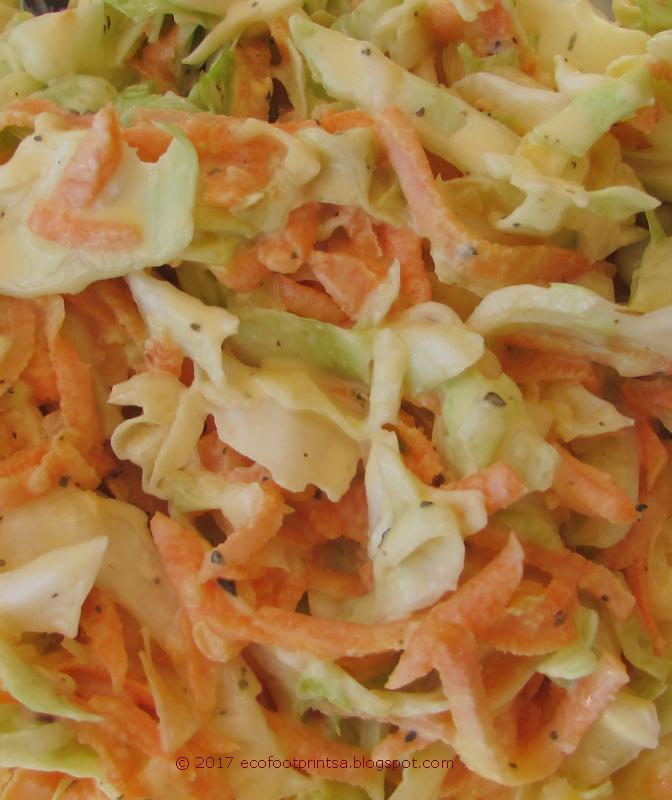
Yum - homemade coleslaw
Beetroot, peas, broad beans and swiss chard (spinach) are their own companions and they also enjoy the company of onions and garlic.  That is another bed - and in winter only.

The pumpkin and butternut are all by themselves in the deep raised beds of composted alpaca poo.
Dehydrating heirloom tomatoes
And only sweet potatoes are the odd man out - so they'll get their own bed.  I leave them in the ground as our soil never freezes and it is the best way of storing them - and keeps them mouse nibble free.  As I need them, so I harvest exactly what I need.  And, what I haven't harvested, grows again the next season.

With this downsize plan, as we have irrigation on each of the three veggie patches, which we can isolate as required, this will be a breeze.

This makes a whole bunch of sense to me and will, hopefully, save on the watering - and the angst of a failed crop due to excessive summer temperatures.

Saturday, 17 June 2017

Hydroponic update

You'll remember last year back in April I started a small hydroponic system.

This is a report back and a change of plan.
My newly installed small hydroponic ssystem
The lettuce still found the direct sunlight too strong and went to seed.  I will have to grow them in the shade next summer, with light being provided by bouncing it off a north facing wall.
The cabbages grown in the ground, without question, performed
 better than the hydroponic ones
 The cabbages - nope, not successful.
The hydroponic peas did well, and also didn't display any signs
 of "mildew" on their leaves
The peas?  They did beautifully 😄

And the tomatoes - they produced nicely - though not as well as those that were planted in the ground.

So, not a great result.  Not a "Yeeeha, Eureka!!" moment.

Perhaps it was my "feeding" of the water.  Being out in the sticks, and not wanting to incur costs buying and transporting hydroponic plant "food" I only used a seaweed concentrate in the pump tank.

But, I am not discouraged.

So, I have drawn inspriation from this pic I saw a while ago...
This image inspired me to plant strawberries in gutters which
hang on either side of my raised beds
As you know I hung gutters on the side edges of my raised beds and planted strawberries in them.
The current situation / progress of my gutter strawberries
(nope, they aren't battling weeds, but rather self-seeded
 rocket seedlings.  I love rocket, so I'm letting them stay
where they fell)
They are doing well, and this seasons strawberries are beginning to form and hang down the sides of the gutter.    So, I have decided to use the hydroponic pipe to grow strawberries and I will leave the exisiting  strawbwerry plants in the gutter for comparison.

Yes.  I can grow strawberries in the ground, and they have been successful, but the slugs have been just as successful in their quest to devour portions of every strawberry that happened to touch the soil.
The reserve / return reservoir which collects the pumped water back
 to the pumping tank via gravity.
I have suspended a stocking filled with organic fertiliser beneath
 the pipe's overflow outlet.
In place of the seaweed concentrate, I have added a measured portion of organic fertilizer to a stocking which hangs into the return water reservoir.  Everytime the pump switches on, the water falling into the reservoir falls onto the stocking (and it's contents) thereby "disturbing" it and releasing the nutrients.
The organic fertilizer RMan uses for our fruit trees
I planted the hydroponic strawberry runners about 3 weeks ago, and already the roots are beginning to grow out of the bottom of the yoghurt containers I use as hydroponic plant pots. 
New strawberry runners planted three weeks ago are already
 producing roots outside of the tub.  The strawberries were planted
 in a palm peat / vermiculite mixture.
I have the pump on a timer which switches on for 15 minutes every hour from 7.00a.m. to 7.00 p.m.  After that the water which remains in the pipe must suffice until the pump circulates the water again.
A shallow "bowl" of water permanently remains in the base of the
 pipe for access by the plants when required.  It doesn't fill the
 pipe completely and thereby provides air to the roots as well.
The new strawberry plants seem happy and are beginning to grow new leaves.
That, to me is a happy looking strawberry plant 😃
Let's see if I can get it right this time...

I am determined to be successful, as, given climate change / global warming / predicted global water shortages, I believe that hydroponics will figure massively in the future with regards to feeding the masses.  Being inquisitive, I would like to understand the process / problems in using this growing method.

Saturday, 29 April 2017

Preparation paid off

How many of you remember me telling you about some raised beds we made back in February last year?

For those who are new readers I'll  give you a quick recap:
Granite tile crates
We got some crates which had been used to pack / transport granite tiles from the local tile shop and placed them in our shadecloth veggie patch.
Once in position, the crate base was lined with stones - to keep
moles out, and to allow for adequate drainage / prevent compaction
 at the base
 The base of the crate was lined with rocks - to allow for drainage.
one of the layers of alpaca poo
  Then we lined the sides with plastic to prevent the soil washing out, and to retain water.
Lined and layered - it was allowed to settle for a month
Then we layered straw, alpaca poo, soil, straw, alpaca poo, soil, etc (plus some bone meal) until it was full.  it was watered and allowed to "sit" (a.k.a. sink / settle) for a month, after which it was topped up again.

I have always had difficulty growing ginger, turmeric and carrots in our stony, clay beds.  So, I throught I'd try growing them in the raised beds and see if I had more success...

Those turmeric leaves are +/- 4 feet high
Well, I'm please to say the attempt was successful.  The pic above is the turmeric.  Actually, I planted the corms in the wrong season, and forgot about them.  Lo, and behold! one day I spotted growth, and thinking back, I recalled that turmeric had been placed there.
I always think of alpaca's when I see carrot tops
 - they l-o-v-e them ;D
The carrots - they did bloody marvellous mate :D  with no distortion of the carrot due to stones ('cos there were no stones in the bed lol).
My finger gives you something to compared the carrot top to
 I didn't succession plant them (yet) - I wanted to see how they would do.
Matchbox for size indication, and scale weight as proof
 To give you an idea, one carrot weighed 540 gms (19 oz).
Proof that the 540gm carrot was not an isolated thing -
 there are others still in the bed of a similar size.
And there are more like that...  Lots more :D
Yummy, home-made coleslaw
How did it taste?

Absolutely bloody delicious :D  Juicy and sweet.

Half of the 540 gm carrot immediately went into a coleslaw, the rest will make some yummy carrots in honey butter.  And the tops were wolfed down by the alpaca's.

No waste here lol

All that alpaca poo, soil and straw layering definitely paid off.  I'm very happy with the results and will now allocate one of the three raised (crate) beds / year to carrots - rotating each crop between the three.

Saturday, 17 December 2016

Mulch rescue 2 a.k.a. preparing for water shortages


The signs have been there for the past months.

Our rainfall for the passed three years
Our rainfall this year is averaging out at 43.3mm / month, compared to last year at 60.3mm or 2014 at 53.5mm.  Looking at the graph you get the full sorry picture.  And, all the forecasts are not predicting any rain whatsoever in the next 10 days... :(

So, most things hereabouts are crunchy, crisp and dehydrated...
http://www.fin24.com/Economy/drought-is-a-wake-up-call-on-sas-water-needs-20160911-2
We were warned back in September that our dams were in dire straits.  Harry commented last week that everything looks so lovely and green compared to his brown, hibernating winter scenery.  Well Harry, pics can be deceptive.

As you can see from the pics below, we are well in the throes of a drought. 
Dead looking, dry and drab - that about sums it up
Between the unusually high temperatures for the time of year, plus the hectic drying winds, and finally with the lack of rain our garden is in a sorry state.

 But, forewarned is forearmed.  Between my rainfall records, and what has been published in the newspapers, we knew that it was gong to be extreme this summer.  So, we took steps to counteract the situation as best we could - without going greedily overboard with municipal water usage.

That was in our best interests because if everyone decided that bugger the cost, they were going to water willy-nilly, then how long would the water in our local dam last?  That municipal water supply is all we have - there is no nearby stream or river that we could use.

Believe it or not, our 8 X 5 000lt rainwater tanks are also empty... :(
Piquante peppers under a protecting
 blanket  of wood chip mulch
So eight trailer loads of wood mulch (roughly 8 X 1.5mtr3 or 12mtr3 in total) from our local sawmill has certainly assisted our fruit trees to produce their fruit - not as big as last year, but at least it was enough for me to bottle some - and make some jam / cordial.

And the wood mulch is a Godsend for my veggie beds.  A dose of organic nitrogen (a mix of seaweed liquid fertilizer / alpaca poo / chicken poo and worm casings) helps overcome the nitrogen leech than wood mulch causes.

An added bonus with the wood mulch is that weeds can't grow - so weeding is, for once, at a minimum :D  Yeeha!!!
There's not much we can do for the grass, and, as far as the alpaca's grazing is concerned, we managed to buy in oat and barley hay from the local farmers, so the alpaca's won't starve.
4 large round bales of hay to help the alpaca's.
The infamous, and over worked trailer is on the right hand side of the
pic, under the self seeded wattle tree.
But, the extreme dryness is not pleasant on the eye.  And the crunch underfoot makes one aware how dire the circumstances are.
A single turmeric leave is visible in amongst the rocket
But, on a more positive note, a few months ago I saw turmeric root for sale in the shops, and, as I had never seen it in our shops before, I couldn't help myself - I had to buy some. 

I immediately planted it all into one of the three raised beds in the shade cloth veggie patch - and forgot about them.  They hadn't forgotten about me though.  In the last week I noticed some strange green leaves poking up between the rocket, and deduced that the turmeric had decided it liked being where it is, and, by way of thank you, it would peep a lookout above ground to see it's surroundings.

Great excitement LOL
In the centre of the pic you can see a ginger stem, which
 was accidentally left in situ last year, and which is growing again too
I thought if it grew it would probably look something like ginger, but it doesn't - it's completely different.

Finally, an errant sunflower seed, which wasn't gobbled up when I fed the chickens one day, surprised me by showing it's face in the berry patch.

Sunny, bright and cheerful - an unexpected
 sunflower to add to the seeds I purposely
 planted in order to feed the chickens throughout
the coming year.
Aren't we blessed with being able to grow all manner of amazing plants - both big and small ;)


For info on how you can obtain your own Foothills DryAway please click the link.

Wednesday, 27 November 2013

Spring garden goodies


Welcome to dreamer - my newest follower.  dreamer is from southern Scotland - an area called Cairnsmore to be specific.
dreamer doesn't appear to have a blog / web page - if I'm wrong, dreamer, please let me know, and I'll gladly insert the link.  Thanks for hitting the followers button.

Update: dreamers bog can be found at : http://dreamer-dreamingofasimplelife.blogspot.co.uk/

She has a very interesting blog - won't you pop round and have a look?

-------------------------------

The first plants to start producing this spring were my strawberries.  They were so eager that they started flowering at the beginning of July!!
I have never known strawberry plants to produce
flowers, never mind fruit, in July...
...in South Africa?!?
The three ducks that we inherited from one of our neighbours over a month ago, found they had a taste for strawberries, and proceeded to wipe out as many as they could, Until I caught them in the act.  And here I blamed those poor field mice again...

So - that resulted in my buying some bird netting from the local co-op and draping the entire 25mtr long bed.  And here my poor brain thought bird netting was only for the flying kind...
Strawberries - some for eating and the rest
I popped into the freezer until I have enough
to make jam...
The strawberry plants have produced a fair number, but not all at once.  So, apart from those we've eaten fresh, I popped the other strawberries into bags which I keep in the freezer.  I figured that once they stop producing, I can take the strawberries from the freezer and make jam with them - in my solar oven. Yum - can't wait :)

I've harvested about 5 kgs so far...
The plum trees were the first
to blossom - t'was stunning to
see
Then the fruit trees - the plum trees were the first to get those gorgeous, uplifting, awe-inspiring spring blossoms.  And loads of fruit - which the wind proceeded to blow off.  Ah well, I think the trees are only two years old and still need a year before they should be allowed to keep their fruit - so nature is guiding me well.
Peach tree in blossom
You recall back in May this year that I wrote about saving those onion bottoms and, after allowing the dried roots to re-hydrate in a small bowl of water for a couple of days, planting them back in your veggie patch?

Well, the pic below is one of those "re purposed" onions.
Five onions gorwing from the old bottom of a single
onion - whoo hoo!
Here I thought each onion bottom would only grow one onion, but this one has produced 5!  Happy days :)

Apart from the onions, I also have garlic (which I've harvested most of already), tomatoes, the swiss chard is growing in profusion again (and that's given me a hint of what to make for dinner tonight - creamed spinach with a fried egg and toast), as is my zucchini and pumpkin, and the saved seed from the Franchi Sementi purple and yellow bean plants from last years harvest - and a nice crop of chickpeas and carrots is also growing.  It has already been too hot for my lettuce - even in the shadecloth veggie patch - and the plants have all bolted, but I am going to make a plan to turn up a couple of the re-purposed sub-irrigated Styrofoam containers (that I still have) into  raised veggie patch boxes, literally, and place them in the shade - with light being bounced off from a nearby wall.  That should sort out the overheating / bolting problem.

Those re-purposed styrofoam containers have been brilliant - I've used them for growing plants in, for using as deep drip trays for propagated lemon trees, and as a bath for the newy adopted ducks, amongst many other uses.  S'funny, talking about the ducks - whoever owns them has not come looking...? Maybe they have too many?  But, they're free to return home - the way they came - however that was...

None of my chilli and pepper seeds has peeked above ground yet, and I have still to buy a tray of aubergines seedlings from the local nursery - it would appear that I am completely unable to rear them, so I leave that to the experts LOL


And finally, for the first time, I have managed to grow cabbages - I companion planted them amongst the strawberries LOL  So  - there is lots of coleslaw in the future, as well as stuffed cabbage leaves cooked in the solar oven, and cabbage cooked in milk, instead of water, with garlic, butter, salt and pepper - quite delicious :)  Maybe I'll try fermenting some cabbage too - if it's not too hot...