Now CGuy and I - we're on a mission. The worldwide recession has caused us all to be a tad jittery, and the ongoing financial woes of the world, coupled with dire forecasts being released almost on a daily basis from many of the worlds' financial bigwigs, could also be adding to my nervousness.
With that in mind I am squirreling away dry goods every time they appear on sale. Lentils, rice, beans, split peas, pasta - shapes / spaghetti, etc - they're all piling up in my pantry. Well, they won't deteriorate over time, especially using a sprig of bay leaves from my tree in each bulk container to prevent weevils, so why not?
I have tried to learn to be as self-sufficient as I possibly can (with grateful thanks to fellow bloggers and Google) and have learnt whatever skills I can, in order to allow us to continue with our basic lifestyle in any situation. Things such as growing as many of the crops we consume as possible, how to make my own soap, how to preserve, using the sun to cook our meals, make compost, use different farming methods (and which would be / could be applicable to our little farm), to name but a few... I even have plans, and the wherewithall, to make a solar still in order to produce clean drinking water from contaminated / brak water.
... loo paper - hmmm - guess we might have to learn to use handfuls of grass (I know, I know - that's too much information LOL)
And, being off grid, has relieved me of the headache of fearing a power cut too! Any appliances which I use on the farm will either be solar powered, or will be run using the petrol generator (and the only appliance that I can think of is the washing machine :) )
So, with most of the bases covered, I'm now concentrating on the little, niggly things - like for instance we want to try and find a hand operated (preferably stone?) grinding mill for wheat which we hope to purchase from the local farmers. And, of course - what am I going to do about sugar?
I am NOT prepared to grow sugar cane, even if I could. Apart from everything else, rodents abound in sugar cane - and with the locusts, snakes and scorpions, I have enough to think about without adding rodents to the mix. Never mind how on earth would I process the sugar cane? So - how to provide our sweetening agent?

So, that's tea and coffee sorted - plus any sweetening that I many require for basic cooking. But - and this was a big BUT before I googled it - what am I going to do about preserving?
I'm going to use HONEY of course :)
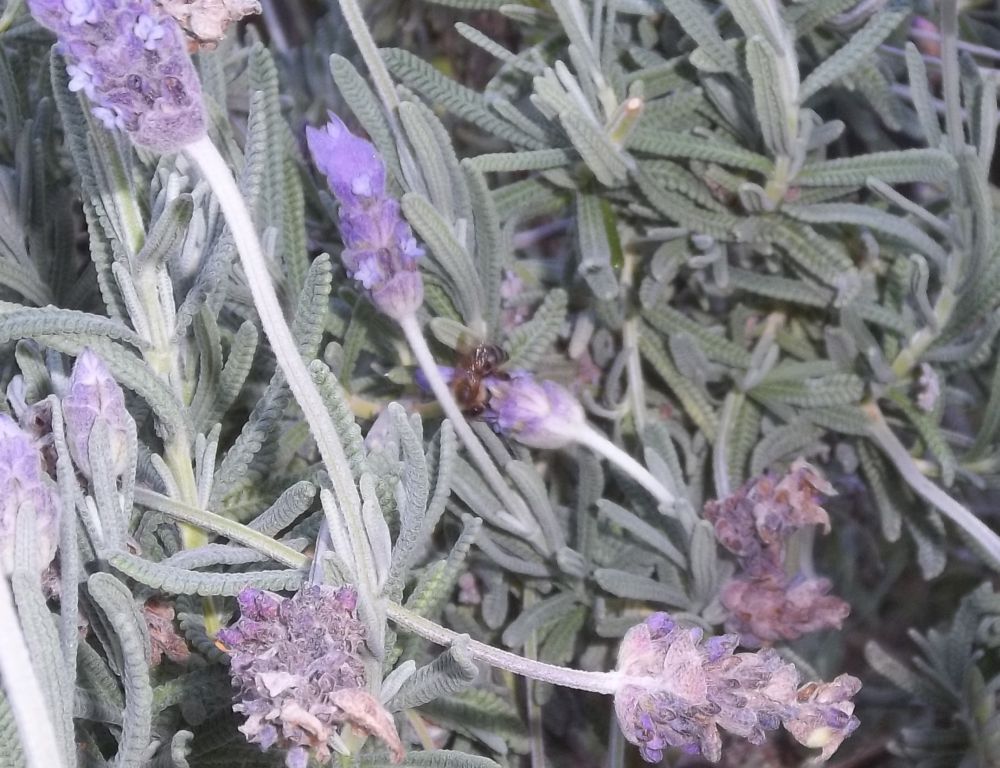 |
| Those are busy little wings LOL |
STRAWBERRY JAM
4 1/2 cups prepared (washed and hulled) fruit (about 2 quarts ripe strawberries)
1 box (1 3/4 ounces) powdered pectin (I'm going to try and see if homemade apple pectin will work too)
7 cups mild-flavored honey
Making jam with honey - brilliant! So that's another things I can cross of my list :)

1 Honey assists in the healing of bee stings :) Gently apply a little honey to the area of the sting.
2 Completely viable honey has been found in the pyramids - admittedly in a crystallized form, but nothing that a dunk in hot water couldn't sort out :)
3 Due to the antibacterial / antiseptic qualities of honey, it may be used in place of a medicinal ointment for general cuts and burns. This is especially useful for those living in remote area's. It is a very effective means of quickly rendering heavily infected wounds sterile, without the side effects of antibiotics, and has also proved effective against antibiotic resistant strains of bacteria.
4 Honey has a low pH which hinders and prevents the growth of many species of bacteria. It also has a tendency to absorb water from a wound, which effectively deprives bacteria of the moisture they need to multiply. This absorption dilutes the honey and activates an enzyme which produces hydrogen peroxide - which surely must be in everyone's medicine cupboard ;)
4 Honey, when used on wounds, will not cause the dressings to stick to the (healing) wound.
6 Honey is more easily digested than sugar, resulting in it entering the bloodstream quickly and giving an instant energy pick-me-up.
7 Finally, honey is good for the skin and apparently, when applied as a face mask, reduces the appearance of wrinkles. (Reckon I could do with a couple of litres of the stuff LOL)

Sugar contains very little nutrients - therefore, in my book, honey is Queen :)
A word of warning to those with little ones under a year in age:
Honey may contain spores which can cause infant botulism in children aged one year and younger. In immature infants’ digestive tracts, however, the spores are able to germinate and release a toxin. Symptoms of infant botulism include constipation, lethargy, poor feeding, weak cry, droopy eyelids and, occasionally, respiratory arrest. By the age of 12 months, infants develop a digestive tract mature enough to handle the toxin