"Self-sufficiency does not mean 'going back' to the acceptance of a lower standard of living. On the contrary, it is the striving for a higher standard of living, for food that is organically grown and good, for the good life in pleasant surroundings... and for the satisfaction that comes from doing difficult and intricate jobs well and successfully." John Seymour ~ Self Sufficiency 2003

Sunday, 20 March 2011

Perigee moon

Last night there was a perigee moon.

A perigee moon occurs when the moon is in its' closest orbit to the earth - and last night it was 356 000 kms (221 208 miles) away.  In addition, it was also a full moon.

It was an exquisite evening, with crystal clear skies and a temperature of 32oC (89.6oF) at 8.25 pm GMT - there was just a hint of a draft wafting through the trees - almost enough to cool down and dry the perspiration which drenched our bodies - it had been a l-o-n-g hot day...

I couldn't resist trying to capture the perigee on my camera.


I was also lucky enough to capture some stars in the night sky, too - before my camera battery ran out...

But, when I viewed the photo's on my desktop I discovered that I had also captured a whole bunch of orbs.
My photo taken at 8.25 pm (GMT)

Magic!

Have you ever taken a photo of an orb?  We have had heated debates in our family regarding orbs, until I proved to my husband that a photo, taken over and over, on the same spot - click, click, click - did not always result in capturing orbs, and when they did, the orbs were in different places and one can clearly see the different colours of each orb and the shapes within the centre of the orbs.

I was frustrated because I wanted to take other photo's of the perigee, so my obliging RSon, whipped out his camera - a new, stronger, more expensive model.  The results speak for themselves.


Am I being fanciful - does the man in the moon look particularly sad?  I could swear he has tears running down his face.

Can we blame him, if one looks at events worldwide - global warming, and natural and man-made disasters - particularly those that occurred in the far east on Friday 11th March, and, most recently, the "war" which has been declared in the middle east.

If the universe is mourning the state of earth - what are we doing?

Perhaps I am being influenced by the approaching autumn and winter, whilst my northern hemisphere friends are eagerly anticipating spring and summer, and the rebirth of their gardens.

The fact remains though, if we continue mistreating this planet through ignorance (in todays' educated world that is not an excuse), for our own selfish reasons or for financial "reward", we will all pay the price for that disrespect.

When one is privileged to live in the country and above us the exquisite night sky is clear, bright and humbling, we surely appreciate that it is not just this planet we need to be aware of, but also our planets' position, and role, in our universe.

Sharing is caring - let us all make this planet a better place - for all its' creatures - great and small.  We have to consider each action that we take, its' impact on this planet and the consequences we deserve for that action.  How else can we make a positive difference?

Friday, 18 March 2011

Helping yourself - for your benefit

I cam across an interesting report today.  It is all about the energy required to make food which is available to the consumer. 

http://www.postcarbon.org/article/273686-beyond-food-miles

I had always presumed that transporting food to the consumer took up a fair wack of the energy use and costs.  We have all heard about food miles, and have been urged to grow our own / purchase local produce.  So I was surprised to see that half the energy used during the actual processing and production of the food, is where all the energy is going.  When I think of factories, I think of manufacturing factories like a glass manufacturer, a steel producer, a car factory, etc.  I didn't think of biscuit, crisps or cooldrink factories as high consumers of energy.

Apparently, the processing of the raw goods into ready meals / junk food use more than half of the energy - in order to manufacture highly processed "foods" like - crisps, doughnuts, cola (pop) and beer.  We won't even go into how much is used for things like biscuits (cookies), sweets, etc.

And the above is not taking into account the packaging of all the ready meals / junk food.

A real eye opener and surely yet another reason not to support junk food.

Bad for the planet and bad for your body.

No contest!

And did you know that this report discovered that preparing food in your kitchen uses twice as much energy than the farm consumed producing the food in the first place? 

I am not going to go into detail about the article as I have inserted the link above for you to read.

But I will say this:

If you need a plate of crisps, use your vegetable peeler and cut thin strips from a peeled potato - heat up your oil and fry them yourself.  Add your salt when the crisps are cooked and the oil has drained off them onto a piece of brown paper.  Popcorn - ditto.  Or sprinkle with sugar if you want it sweet instead of savoury.

Fresh fruit and vegetables - what
could be better for your body?
Cakes - nothing nicer than the smell of fresh baking pervading your home - and you know exactly what ingredients have gone into it.  The same applies to biscuits, toffees or turkish delight, etc.  Or, for that sweet craving, have a handful of raisins, and dehydrate slices of your favourite fruits, so that you can enjoy them out of season.

And, if you are as fortunate as I am, you can use free energy to bake your foods - via a solar oven.

Solar baked biscuits
There are alternatives to all the junk food out there - but they require that you expend some thought and energy into creating them.  Or is that actually the crux of the problem?  No-one has enough time anymore, even with all the modern conveniences we all have at our disposal?

Or is that just the excuse we all use for the convenience of buying food which is highly processed, ready-made and filled with chemicals to prolong its' shelf life?

Ultimately, though, are we prolonging our lives by consuming that food - or are we adding to the problems which we could encounter as our bodies age? 

How many chemicals should we add to our bodies?  To my mind, the less the better.

But - it goes further than that...

Have you even considered how many chemicals you add to your bodies via daily items such as toothpaste and soap?

The slab of soap waiting to be cut into
the required portion sizes
Yesterday, I made my first ever batch of soap.  I was very nervous, as the propect of using lye frightened me.

But, with the incredibly generous guidance of a friend, RC, who makes soap for a living, I managed to produce 15 bars of the most incredible looking / smelling soap that I have ever seen.  I so wish I had a powerful enough camera to take a photo of the inside cut edge of this soap - the creamy, smooth and luxurious soap that my photo's don't do justice to.

I used a ruler to divide the slab into equal portions :-)
Okay, as I will only have a few selected electrical appliances for use on the farm, I decided that my first batch I would make with a baloon whisk...


My baloon whisk

After carefully measuring out the ingredients, and when the two liquids were at the correct termperature, I carefully blended them together and proceeded to beat the mixture.  And I beat the mixture.  And I beat it some more...

After exactly 1½ hours of beating I finally reached trace stage and could proceed with placing the mixture in the mould.  To say that I had no right arm, nor wrist, at the end of the 1½ hours is an understatement.

It was a complete labour of love... but I did it!!

Fifteen pieces of 200gm soap, on the drying
rack, and placed in my spare bedroom - I
can't wait until they are ready...
I am so chuffed - and I have a new hobby which will benefit the whole family :-)  Although, I have to tell you that I am going to be investing in a low powered (below 1200 watt) blender - apparently trace stage is reached far quicker with a blender...

I took the time, overcame a mental hurdle, conquered my fear, and we will all benefit.

I just love it.  Thank you so much, RC - I owe you big time.

I reckon that if we all got off our collective derrière, and did more for ourselves, we, and our planet, would reap the benefits.

And, simultaneously, we would be teaching the next generation to help themselves, and not too always expect help from outside - making them more self-sufficient.  That, surely, must be good for them?  :-)

Thursday, 17 March 2011

All things great and small

We took another 3 day weekend last weekend - our alarm had apparently being going off at all times, and a neighbour popped passed to see if all was OK.  All appeared good, but we couldn't let the alarm keep invading the peace and quiet, so our only option was to go there to check it out.

Our friend, CGuy, installed the alarm (he used to do that for a living).  Unfortunately he was unable to come with us this time, so RMan had to try and figure it out for himself.  We managed to ascertain the zone which was misbehaving, but were unable to correct it - so, for now, it's bypassed :-)

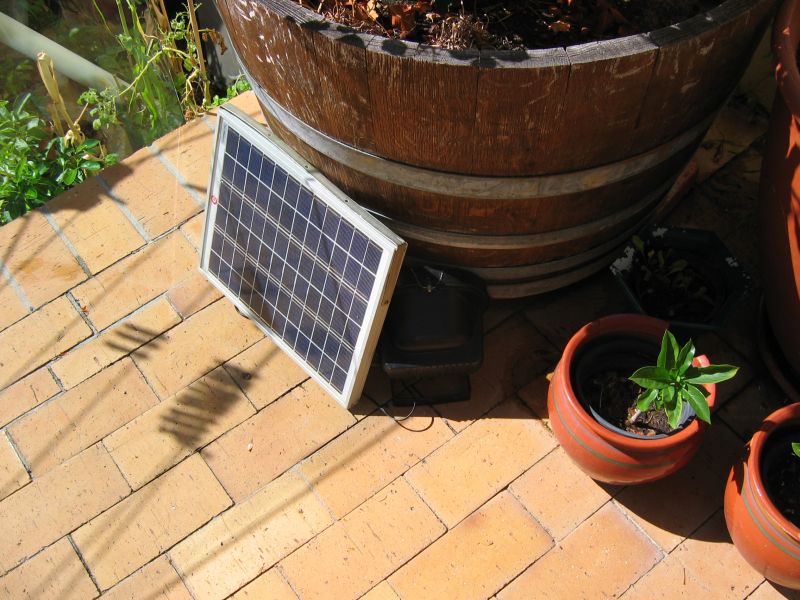
Prior to travelling up we had purchased a small chest freezer and a 1000watt inverter.  After battling all of Saturday with the solar panels (on loan from CGuy) / regulator / inverter and the two batteries, we finally got it wired up and running properly.  Thank goodness, for we now have the wherewith all to keep food from turning, create bottles of ice water to chill a cooler box we are using as a fridge (for things like salads, eggs, etc) and, probably most importantly, RMan has always got a chilled beer available - the chest freezer gets his beers to perfect drinking temperature in approximately 1 hour!

As I was walking towards our grape vine area to check on the progress of our grapes I was suddenly stopped in my tracks. There, not 20mtrs away, was movement - of something unexpectedly large. It was a hare - at least 80cms (31 - 32 inches) in height. Now we have seen one before, almost as big, but that was in the late hours of the night. We've never spotted one in the day before. Naturally, my bumbling through the grass gave it a fright, and it hopped away as quick as anything. But I was thrilled - although perhaps I wont be as thrilled when it eats the grapes that finally grow on our vines...

On Sunday morning I took a walk to our neighbours farm - I had noticed that they hadn't been home since we had arrived on Saturday morning. On our previous visit the inhabitants had not been home either, and in fact had told us they had moved to the nearby village, bacause of their school going child.  we had presumed that they had taken their animals with them.  But I felt uneasy.  So I took my stroll.  Yes, the dog and chicken were there alright, with no visible food around for them, and a small amount of water ina bowl in the chicken coop.  I was horrified!   Do I interfere?  Getting back to our house I discussed this with RMan - and he, reluctantly, advised against interferring.  But I couldn't forget those animals... so I sneaked back and left a pile of dried cat food near the entrance to the property, and in sight of the dog - it was all I had.

About an hour after I got back, I glanced, for the umpteenth time towards our neighbours farm, and spotted movement on his roof.  Can chickens get that high?  Would they?  I grabbed the binoculars and almost fell over.  There, jumping and sliding about on this roof were ...


baboons!  About 7 - 8 of them, including one very large male!  I'm sorry the picture is so far away - I was a little nervous about getting too close - baboons can cause serious injury, if they are so inclined, and, as I didn't know what mood they were in, I gave them the benefit of the doubt.  But we feared for the dog and the chickens...

On Monday we managed to have some time in the garden before we headed back to Cape Town.  On our last visit we had hired a digger / loader, and the driver dug some trenches next to the lemon trees we planted in January this year.  We filled in the trenches again, (scaring a frog which was hiding under a clod of earth) adding lots of compost and then we planted another 5 lemon trees.  We figured that the loosed earth in the trench would assist the newly planted trees as the ground is rock hard there in summer - not easy for a little lemon tree to spread its' roots.

I have to say though that the trees we planted in early January are flourishing - they have trebled in size in just 2 months, and, considering we are heading for autumn, I'm particularly impressed.

Lemon trees which were planted in January 2011

Just look how they've grown!
But, even more exciting - and I am completely blown away by this.

Sometime towards the end of last year I planted some pips - for the life of me I can't remember what they were - were they from a lemon or from a bag of delicious oranges that we had purchased on the drive to the farm?  Apart from the fact that I cannot throw away any pips I find in lemons or oranges, and shove each and every one of them into whatever soil is handy, I really can't remember what is was that I plonked into two strips of clay, outside our kitchen door.  Those strips of clay mark our future veggie patch, so I have been tossing all the compostable waste from the kitchen there - figure I'd give the ground a bit of a start LOL.

So, during this visit I went to toss away the waste parts of salads / egg shells / tea bags which had accumulated in the kitchen compost bowl, and as I was walking back to the kitchen, what did I see...

... three tiny little trees growing.  The leaves smell like lemons, or could that be oranges?  Whatever, I am completely amazed, for these little pips have had no water - whatsoever!  The day they were shoved into the ground, I watered them, and then forgot they were there...

I can see I'm going to have a wonderful time with all the lemon trees we have planted / have yet to plant...  The plan is bearing fruit.

Sadly, yet again, our time on the farm drew to an end.  I started loading the van and as I stepped out of the kitchen, lo! and behold! I had a last visitor.  It was our neighbours dog.  As soon as he spotted me he scarpered off - back about 20mtrs (21 yards), and then sat - just watching me.

I immediately searched for food to feed it - a few pieces of wholewheat bread, and a bit of boerewors -a typical (coriander seed flavoured) South African sausage which is cooked on the barbecue - and the last of the dried cat food.  The poor animal waited until I disappeared inside again and then crept up and wolfed that down and then polished off the bowl of water I had placed next to the food.

A very timid, nervous dog, who finally managed to overcome his fear of us because of his hunger.  An obedient dog, who didn't attempt to eat the chickens he was protecting.  He was still very skittish and ran away if I walked out of the house, but at least he ate the food I had put outside.

As we climbed into the van, I filled a 10lt (5 gallon) bucket with water - so I knew the dog would have some water for the next few days.

People!  People like this don't deserve the priviledge of owning an animal.


An update on this:  After I returned to Cape Town I contacted a farming neighbour by e-mail and asked her to check on whether our neighbour had returned.  As she arrived at his house, he drove up - so at least the animals have food for a day or so.  She is going to keep her eye out, and if she finds that he is disapearing for days at a time, she is going to get hold of the SPCA.  This cannot, in my book, be allowed to happen anymore... defenceless animals need all the assistance they can get.

Friday, 11 March 2011

Electricity blackouts this winter

On the front page of this mornings' Cape Times was an article concerning the proposed enforced decrease in the power usage of all Capetonians, aka rolling blackouts (aka no power for 3 - 6 hours), unless we can voluntarily cut our electricity use by 25 - 40%!  With winter looming, I think that's a tall order.

Also, considering that we had an average increase of 25% in tariffs last year, (and similarly priced increases definitely on the cards for the next two years) to "help finance new power stations / production and thereby avert rolling blackouts" I, personally, am horrified!

Horrified at the cheek of Escom (the South African power provider) at reneging on their reasons for the price increase.  No rolling blackouts indeed!!

But, I also question why the homeowner should be penalised for industries demand for, and use of, power - even a 5-year-old could work out that manufacturing plants / factories consume far more power than the simple homeowner.

And, I am extremely grateful for the power saving methods I have introduced in our home in the past 36 months.  And for the resultant reduction in power consumption by at least 45% in the past 15 months.

This winter we will not put on heaters / electric blankets (which we don't possess) this winter - extra jerseys / thicker socks - even a beanie or a hoodie - they will all help to keep us warmer.  And, if whilst we watch TV in the evening, it is uncomfortably chilly - well, there's nothing like snuggling under a blanket on a comfy chair :-)  And what on earth is wrong with a microwaved bean bag or hot water bottle at the foot of the bed, if that is required?

My solar oven use may be limited due to the fact that we don't get much sun in our garden in winter - however, with that said, whenever I do have sun available, the solar oven will be employed to make soups - plain vegetable / bean / dried pea soups - the type of soups that can be cooked at a low heat and which will not promote the growth of salmonella or some other such dreaded bacteria, so nothing with milk, eggs, chicken or meat.  I WILL NOT use my electric oven under any circumstances - why should I - I haven't used it for the past 10 months anyway!

My hot box, made out of RSons' old toy box
and shredded paper from the office
which didn't land up on the compost heap.

My hot box worked well last year, and I will probably have to use our gas barbecue for baking bread.  But I don't mind that, as it's instant heat - I don't have to wait for it for 20 - 30 minutes in order for it to warm up to the required temperature, wasting who knows how much power / electricity whilst it does so!  A baking stone on the grill also retains the heat and improves this method for cooking bread.  I would obviously try and combine different foods whilst the barbecue is lit, and it is in "oven mode" - bread and roast chicken / bread and a casserole / bread and a quiche... the possibilities are endless.

Washing drying in our laundry room
I do not use a tumble dryer - either I line dry our clothing, or, if the weather is inclement for a number of days, I make a plan in our laundry room (you could even use your bathroom or a spare bedroom).  Ironing - you can't see un-ironed clothing under jerseys or jackets - so why bother? ;-)  Just ensure that you give the clothing a really good shake (a "snap-shake") when you take it out of the washing machine - and on a windy day, the wind will soon knock any creases out of the garment.

The vacuum cleaner - have you ever tried brushing your carpets with a hand brush or broom?  You seriously don't need to go to a gym to get a workout in your own home.

When we boil the kettle, we fill up a thermos flask with the balance of the hot water - it stays more than hot enough for the next cup or two.  And most of my kitchen implements for preparing food are manually operated.


Manual kitchen implements

ALL our light globes are CFL's - and, at night, we only ever have one on at a time.

Plus, we have our solar light - let the sunlight (what there is of it) charge the internal battery during the day, and use that power at night.


I turn the light to face the wall and the wall bounces back all the illumination we need :-)

My 'puter - can't really cut back on its' use, as I use it for personal pleasure and for our business - so apart from switching off the screen whenever I am not in front of it for a while, I do also have a screen saver function, which puts it "to sleep" after 5 minutes of non-activity.


Our only real problem is going to be our geyser, and, as our purchase of a solar geyser is unlikely this year, I am really tempted to install a Kexin (Dew Hot) LP gas powered geyser, similar to what we use on the farm.  It works brilliantly, and most importantly, only uses gas when you switch on the hot tap.  An added bonus is that it has adjustable settings, for winter / summer use, and a fire adjuster.  And a Kexin (plus installation) will be about 20% the cost of a solar geyser.  Our existing geyser is at least 25 years old, and CANNOT be efficient anymore - certainly not as efficient as the newer models.

Other than the changes we have made, I cannot see how we can reduce our electricity consumption further.

I don't fear rolling blackouts, as we do have the wherewith all to be really very comfortable during them.  And we have, very happily, experienced life without power on the farm.  I just object to their being enforced!

I feel for all the Capetonians who haven't taken steps to simplify their lives or who haven't become less dependent on Escom - the rolling blackouts will hit them pretty hard, I fear.

But, I have to confess, I do love any excuse for candlelight :-)   And I'll have a valid reason to just sit and knit some more dishcloths whilst the blackouts are in force.  Knitting I can do by candlelight.


I will miss blogging and catching up on blogs if the power is out first thing in the morning... But, Blogger (and the problems I am having with my reading list on my dashboard) permitting, I will catch up sooner or later! :-)

By the way, is no one else interested in a give away?  The offer end this evening.

Wednesday, 9 March 2011

Autumn gardening

I awoke yesterday to a completely misty morning - how refreshing that was after the heat of the past couple of weeks.

Even the plants in my garden looked relieved and revived.

This is my rosemary bush with the mist dripping off the end of the leaf spikes...


My Black Pearl chilli plant is ready to harvest...


And I figured that it was the perfect day to plant out my sprouting broad beans.  A week or so ago I popped them into a seedling tray, so that I could give them some TLC whilst they were sprouting - I didn't want the heat to cause any damage before they had even had a chance to start along their intended course in life :-)

Broad beans in the front and newly planted
pea trays in the background

They seem to love their newly prepared possie - they have been relegated to the recycled bath - it is one of the few spots in my back garden which gets sun in winter, and I reckon that their roots will have plenty of depth to spread.  Also, having them in the bath will prevent my having to irrigate the entire back garden (not that it is that big) for the sake of a couple of area's which are planted up with winter crops.  Have to save water where, and when, I can :-)


Broad beans have been planted at the back
and the peas have been sown at the front

But, reading other blogs (from the northern hemisphere) where everyone can't wait to get their gardens started for the new season, I realised that I am very fortunate.  I can grow crops all year round - we don't get frost, and if any snow falls in Cape Town, it is mainly on top of Table Mountain.

So I still have the last of my tomatoes, mealies (sweetcorn), aubergines, green bush beans and radishes to harvest, and I have newly planted broad beans, peas, lettuce, spinach, carrots, onions and garlic all popping their cheeky little heads above ground.


I'm relieved that I don't have to wait until August / September to get back into my garden - don't know what I'd do with myself if that happened :-)

Sunday, 6 March 2011

Sharing is caring... a give away

I am trying to declutter my life in readiness for our eventual move to the farm.

Whilst sifting through my bookshelf I came across this book.


Now, with our non-existant / limited electrical appliances on the farm, plus the fact that I no longer even own a juicer, I thought, "Why not share what you can't use anymore"!

So, partly as a way of marking just over a year of blogging (with many grateful thanks to the new friends I have made in that time), and also as a way of decluttering, I am offering this (well used) book as a give-away - next Friday night  (11th March) RMan will choose a random reply from all the comments to this posting, and, whoever you are, and wherever you are on this planet, I will send the book to you - locally (South Africa), northern or southern hemisphere :-)

So - it's up for grabs. 

It's all about juicing LOL - explaining in detail how to mix and prepare raw fruit and veggies for juicing in order to enhance well-being, and to provide essential vitamins and minerals to help beat fatigue and boost your immunity.  A brilliant little book!

This is a look at the contents page:

Click on the image for a bigger picture
All my northern hemisphere readers are just beginning their spring  / summer gardens / plantings.  This book may help one of you decide if you're actually going to plant "that particular" plant this year in order to harvests its' produce and put that to good use :-)

And, for my southern hemisphere readers - maybe it will help to pass the winter months dreaming of an gooseberry, banana or strawberry smoothie / juice next season...

Here is a peek at three pages from the back index (click on the image - I hope I left the image big enough for the index to be visible :-)  )


I am a firm believer in paying it forward, so, to the winner, all I ask in return is that you go through your bookcase (or whatever), and "pay it forward" if you're so inclined :-)

A bit of sharing on this planet cannot go amiss, can it?

Uses for banana peels
Finally, on the subject of fruit, and specifically bananas, did you know that a potassium rich, ripe, or black, banana isn't just for a banana loaf - the peel can be used as a soothing rub for an insect bite - it really works, I kid you not.  So, whenever I make banana bread, I pop the skins in the freezer, and the next mozzie, or gnat bite, I whip out a peel, and Hey, Presto!  the itch is gone :-)

A ripe banana can also be used as a face mask, and the skins used to polish shoes and for wiping down the dusty leaves of houseplants.

Finally, use crushed dried banana peels when you plant out seedlings.  Just place them under the seedling and feed your plant a boost of free, nutrious extra potassium :-)  Placing used banana skins in your compost heap will have the same effect - but obviously, more diluted.

We have so much out there which we have forgotten how to use!  Gotta love this planet and what we have free access to, haven't you?

Have you any alternative uses for plants / fruits that you'd like to share?

Postscript: 

Give away closed:  Emilysincerely - you are the winner, by unanimous decision :-)  Please could you let me have your postal address - mail me on: dani at ecofootprint dot co dot za

Enjoy - it is a brilliant book!

Friday, 4 March 2011

Continuing making a difference journey - the benefits of buying in bulk

As a small income producing sideline, I am in the fortunate position of manufacturing salad dressings for a few of the local restaurants.  That entails buying as many goods as I can in bulk, in order to keep the costs as low as possible.  Bulk items are packaged in bulk containers, which are generally all recyclable.  Naturally, I am incapable of throwing these containers away, and use them for a variety of my storage solutions.


Here, on the top shelf, I am storing my herbs (which I use in cooking, salad dressings and preserving) in empty mayonnaise jars.

I also use these jars to store...


Cereals and sugar
and...

Dried pasta and rice
and finally, they also store RMans' spare parts, nuts, screws and bolts on the farm (sorry, I don't have a pic of that).

They are perfect as they do have an inner seal on the lid, so I don't have to worry about creepy crawlies gaining access.  (Don't forget - a sprig of Bay Leaves in the jar prevents weevils.) 

It's just a pity the jars are made of plastic - I reckon they could've made cool preserving jars!!

Now, I realise that not everyone has access to bulk containers, but have you considered your local restaurant?  They probably throw away dozens of bulk containers a week, and would be grateful to someone / anyone who could assist them in disposing of their waste / relieve them of the added refuse collection - which the restaurant probably has to pay for - I know they charge restaurants per bin / weight in the UK.  (And for my readers who frequent the "Grub Shack" I'm sure that Jerry and Eva must have more bulk containers than they know what to do with LOL).


These white containers with blue lids are from 125ml (4 fl.oz) and 250ml (8 - 9 fl.oz) cream.  When they are new and full of cream they have a foil seal.  Once that is removed, the (blue) lid fits, but not airtight.  Thus, in my book, they make perfect storage containers for the (very dry) seeds obtained from plants in my vegetable patch which have gone to seed, or from vegetables / fruits which I purchase from the local greengrocer (such as paw-paws, watermelons, squash and pumpkins) as I am currently incapable of growing them (but which I hope to grow next season on the farm).  I also add a sachet of silica gel to prevent a build up of moisture in them - the silica gel sachets we get from bottles of tablets / vitamins, and I certainly can't toss them into the rubbish bin either!

The tall glass bottles are from fruit liqueurs, and I'm still debating what to store in those - possibly flavoured vinegars.

The smaller jars (on the right of the picture) are for kitchen use of herbs and spices - when I need to make salad dressings, I pull out the big guns.

Factories are always going to produce some of their goods in bulk containers.  If we can re-use these containers, we are, firstly, saving on the purchase of such containers for use in our homes / potting sheds / childrens playrooms / classrooms / garages, secondly, we are re-using something which is perfect as it is and does not need be recycled to produce (using unnecessary energy) something else, and finally, buying in bulk is cheaper - you're not having to pay extra to cover the cost of all the smaller containers.

This is a brilliant link detailing the storage life of most foodstuffs - it certainly simplifies my life :-)

Wednesday, 2 March 2011

Involve the family in making a difference

I think it is safe to say that in 90% of households, womenfolk lead the way in trying to make a difference in what is sent to landfill, how to reduce power consumption in the home and in teaching our children how we can help heal our planet.

What would the world look like in 100 years if we don't all do our bit?  Would there, in fact, be a planet left - a planet which is still able to provide for man and all the living creatures which inhabit this planet?

These are just a few of the ways that we are trying to "do our bit"...

Recycling - waiting for collection
We, in Cape Town, are extremely fortunate in that we have a weekly collection of our refuse and a separate collection of all recyclable goods.  Separating recyclables from general refuse is easy, and it takes no more time than walking to the dustbin to throw out the garbage, because our recycling bin is next to our dustbin - so no excuses for throwing away something which can be recycled.

I have taken recycling one step further too - I try and re-use all plastic containers which pass through this house. Unfortunately, the suppliers in this country are trying to cut their costs, which means they package their goods in plastic jars / bottles, more than in glass. I re-use plastic milk bottles for my seedlings, and any other plastic jars are used for storing dry goods - I even store seeds in them, once they are thoroughly dry.  And, in place of shelf liners impregnated with an insecticide, a sprinkling of bicarbonate of soda on the back of the shelves or a sprig of Bay Leaves placed inside the container (and replaced every 3 - 4 months) will keep the weevils at bay :-)

Our small compost bin - for all the kitchen scraps
Grow your own produce - if one practises an organic approach, your homegrown fruit and vegetables are guaranteed to contain no chemicals, and will retain all the goodness for which they are grown - goodness which will not leeched out in the time they have spent being transported from farms to markets, and then sitting in supermarkets fridges / shelves waiting to be purchased.  Also, I think it is safe to say that if one grows ones' own vegetables, then one will also have a compost heap.  Which means each week less refuse goes to landfill, where it produces methane.  A well managed compost heap will not emit anything near as much methane as a landfill site, and whatever is added to the compost heap (vegetable scrapings, shredded paper, egg shells, egg cartons (for those of us who don't have chicken - yet) coffee grounds, tea bags and tea leaves, lawn clippings, garden trimmings) will break down to become the most wonderful addition to the soil of your garden.  It is easy to create a spot in your kitchen for all the compost ingredients - this is what I have:

A small container for the vegetable peelings
(with a lid to keep the flies away)
and another to collect the recycling goods - right
next to the draining board
Once that is full, off to the compost heap with it :-)

Why should each and everyone of us avoid using chemicals in our gardens?  Do you really want to add unnecessary chemicals to your diet - which are indisputedly harmful to you?  Have you tried an eco-friendly solution of boiling chillies and garlic in water, taking that boiled water and diluting it down and adding a drop of dishwashing liquid and sparying that on your affected / munched plants?

In addition, whatever chemicals we carelessly add to our lawns or beds, a large amount of it is washed down into the drains where it is captured into our water system when it rains.  Not to mention the animal / plant life that we are unconsciously affecting.

The knock on effect of what we selfishly do, will live on far longer than our time on this planet...

And how many people are aware that the water provided to households in Cape Town since December 2010 is recycled effluent?  Should we be proud of that achievement?  Another reason to install a rain barrel to catch all the water from your gutters - ideal for your garden, and, in an emergency, if it is properly sterilized prior to consuming, it can support human life too!


Owl electricity monitor - instant reading
of your current power consumption

Have you tried monitoring your electrical consumption through the use of an electricity monitor such as the Owl - the less electricity we use, the less has to be generated, and in South Africa most of our electricity is produced by coal fired power stations, or the dreaded nuclear power station at Koeberg, near Cape Town.  We have reduced our electricity consumption in our household by approximately 45% since I purchased our Owl as a Christmas gift for RMan in December 2009.  It is soooo easy to install and it monitors every watt consumed by your household every second, 24 / 7.  I kid you not - EVERY second!

Damp curtains create an air-conditioning effect
There are also various methods one can employ which don't involve using electricity - for instance, in summer when the heat becomes unbearable, we don't switch on our air-conditioning (we don't even own such a device) - all we do is hang wet towels at the windows, or dampen the curtains hanging at the windows / doorways - the draft wafting through the wet items immediately cools down the interior temperature.

We have even used the damp towel method
whilst driving in our car - it works a treat!
We switch our geyser on for 4 hours every three days - and the water stays more than hot enough to last the three days.  Obviously, in winter this will not be possible, but now, this last summer, we have reduced our electricity consumption by 9 - 10 Kw each day we didn't have the geyser on!  We have also turned our geyser down to 50oC (122oF) - add no cold water in winter and it is the perfect temperature for having a shower.   Unfortunately, as much as I'd love one, we are not in the position to install a solar geyser - maybe next year...

And you all know how much I use my solar oven :-)  My conventional oven has not been switched on for the past 10 months!

Similarly, in winter - an extra jersey and warm socks - even a beanie - they do the trick.  Save the heater for when you really need it - don't switch them on at the first sign of cooler weather.  We have all become so selfish in our use of electricity, that we think it is our right.  Yes, we pay for the use of it, but do we ever stop and think of how the planet is paying for it too?

I have also enjoyed sharing most of what I have learnt / researched with RMan. His understanding of my motivation and compliance in the process, is helping us achieve something amazing, but, just like a naughty child, I can still on occasion find plastic bags in our kitchen dustbin, not the recycling bin... :-)
I'm personally very chuffed that our refuse
is down to two small shopping bags in the dustbin a week.
But, what I am most proud of is I am doing as I say - which is the greatest teacher of all. Lead by example, your children will naturally follow, and, hopefully, their friends will follow them, and ...

I have touched on just a few ways of making a difference - I will share more in the weeks to follow.

How do you / are you trying to make a difference?